

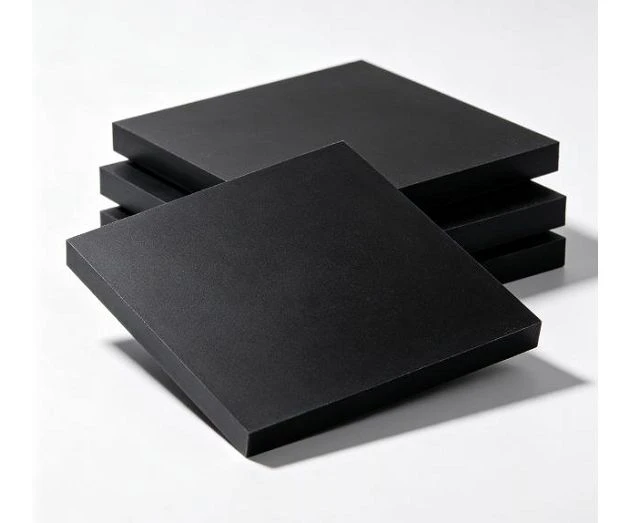
Product Overview
HDPE Heavy Duty Wear Plates are engineered, replaceable lining panels designed for hoppers, chutes, bins, transfer points, and bulk material handling equipment. They create a low-friction, impact-absorbing wear surface between flowing materials and steel supporting structures, protecting core machinery from abrasion, corrosion, and continuous material sliding.
Technical Specifications
|
Property |
Typical Value |
|
Material Grade |
High-Density Polyethylene (HDPE) |
|
Density |
0.93 - 0.97 g/cm³ |
|
Hardness |
Shore D 60 - 70 |
|
Tensile Strength at Yield |
≥ 20 MPa |
|
Water Absorption |
≤ 0.01% |
|
Working Temperature |
-50°C to +80°C |
|
Coefficient of Friction |
0.15 - 0.25 (Static/Dynamic) |
|
Compliance & Standards |
FDA Food Grade / Anti-static grades available upon request |
Key Performance Advantages
Low Friction & Anti-Caking: Smooth surface properties promote continuous material flow, preventing bridging and wall sticking in chutes and hoppers.
Structure & Wear Protection: Acts as a durable, sacrificial barrier that extends the service life of underlying steel frameworks.
Impact Energy Absorption: Polymer elasticity absorbs mechanical impacts from falling bulk material, reducing noise and structural vibration.
Corrosion & Moisture Resistance: Completely impervious to rust, rot, and chemical corrosion in wet handling environments.
Lightweight Handling: At roughly 1/8th the density of steel, lightweight panels allow safer, faster installation and field replacement.
Primary Applications
Hopper & Bin Liners
Protects internal storage walls from continuous loading, abrasion, and discharge flow.
01
Inclined Chute Panels
Ensures smooth gravity flow in sliding sections while shielding the support structure.
02
Transfer Point Impact Zones
Shields drop points and redirection zones subject to repeated material drop.
03
Conveyor Wear Components
Processed into durable wear strips, side guides, and sliding bed plates.
04
Feeders & Material Handling Equipment
Extends component life in vibratory feeders and mechanical loading zones.
05
Application Thickness Reference
|
Operating Condition |
Recommended Thickness |
|
Light Sliding Contact |
3–6 mm |
|
General Material Handling |
8–15 mm |
|
Continuous Abrasive Service |
15–25 mm |
|
Heavy Wear Zones |
25–40 mm |
|
High-Impact Drop Zones |
40–100 mm |
Supply Formats
Full Sheets
Supplied in standard sheet dimensions for in-house fabrication and cutting.
Cut-to-Size Panels
Pre-cut to precise length and width for fast field assembly.
Pre-Machined Liners
Fully finished components with pre-drilled holes, slots, and countersinks.
Custom Profiles
Complex geometric shapes produced from CAD files or physical templates.
Mounting Configurations
Countersunk Bolting
Recessed fasteners prevent obstruction to sliding material flow.
Slotted Hole Patterns
Allows adjustments during site installation and accommodates thermal movement.
Custom Pattern Matching
Bolt hole layout matched directly to existing equipment support steel.
Manufacturing Quality Control
Raw Material Verification: Material density, melt flow, and hardness are verified against raw resin specifications.
Dimensional Inspection: Sheet thickness, squareness, and overall tolerance are checked prior to processing.
Machining Precision: Hole centers, countersink depths, and slot geometry are verified against engineering drawings.
Final Surface & Export Packaging: Plates undergo final surface cleaning and protective packaging (palletized wrapping/wooden cases) prior to dispatch.
FAQ
Q: Can the plates be supplied according to a drawing?
A: Yes. Cut-to-size and machined plates can be produced according to an approved technical drawing.
Q: Can you supply individual replacement plates?
A: Yes. Individual plates can be cut and machined according to the required dimensions and quantity.
Q: Can holes, slots and countersinks be machined?
A: Yes. These features can be included according to the required dimensions and fixing method.
Q: What information is required for a customized plate?
A: The basic information includes material, thickness, length, width, quantity and machining requirements. A technical drawing is preferred for complex components.
Q: Can an existing wear plate be used as a reference?
A: Yes. An existing component, sample or marked-up drawing can be used to establish the required dimensions.
Q: Can the same specification be supplied for repeat orders?
A: Yes. An approved drawing and product specification can be used as the reference for subsequent production.
Q: Is HDPE suitable for wet operating conditions?
A: HDPE has very low water absorption and can be used for applications exposed to moisture and water.
Hot Tags: hdpe heavy duty wear plates, China hdpe heavy duty wear plates manufacturers, suppliers, factory, HDPE Long Life Wear Sheet