

Product Overview
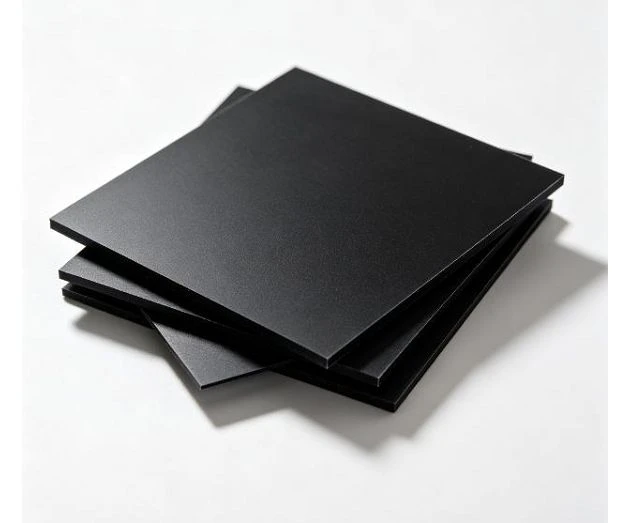
HDPE (High-Density Polyethylene) wear liner plates serve as a protective, replaceable contact layer between sliding bulk materials and heavy steel equipment. Designed to prevent material bridging and equipment erosion, HDPE panels offer a cost-effective alternative to heavy alloy steel or ceramic liners. With exceptionally low water absorption and lightweight properties, these plates streamline maintenance downtime while ensuring continuous material flow across chutes, hoppers, and conveying systems.
Technical Specifications
|
Mechanical and Thermal Property |
Typical Value |
|
Material Base |
High-Density Polyethylene (HDPE) |
|
Density |
Approx. 0.96 g/cm3 |
|
Shore Hardness |
65-70 Shore D |
|
Tensile Strength at Yield |
Approx. 21 MPa |
|
Tensile Strength at Break |
Approx. 35 MPa |
|
Elongation at Break |
> 800% |
|
Flexural Modulus |
Approx. 1,500 MPa |
|
Water Absorption |
Negligible (< 0.01%) |
|
Melt Flow Index (MFI) |
Approx. 0.5 g/10 min |
|
Brittleness Temperature |
Below -40 deg C |
Key Performance Advantages
Ultra-Low Sliding Friction
Provides a smooth polymer contact surface that lowers sliding resistance, prevents sticky media from caking, and eliminates material bridging.
Lightweight and High Toughness
Weighs significantly less than steel (density ~0.96 g/cm3), reducing overall structural load and simplifying manual installation during maintenance overhauls. High elongation (>800%) absorbs operational flexing without brittle fracture.
Chemical and Moisture Resistance
Zero water absorption prevents wet bulk materials from freezing or clinging to liner surfaces. Highly resistant to most acids, alkalis, and industrial cleaning solvents.
Industry Applications
Chutes and Transfer Systems
Discharge chutes, loading chutes, transfer points, side walls, and bottom liners in Mining, Quarrying, and Aggregate Handling.
Hoppers, Bins and Silos
Feed hoppers, storage bins, surge hoppers, and discharge outlets in Coal Handling, Power Plants, and Cement Manufacturing.
Conveyors and Feeders
Drag chain liners, conveyor skirt boards, wear strips, and transition guide plates in Agricultural and Grain Handling Facilities.
General Industrial Lining
Replaceable wear surfaces across bulk processing facilities requiring corrosion protection and smooth material flow.
Thickness Selection
Light Sliding Wear
For fine particle flow with minimal impact, select thinner plates (6-12 mm) to conserve space and minimize cost.
Continuous Heavy Flow
For continuous sliding of abrasive bulk materials, select medium thicknesses (15-25 mm) to maximize service lifetime between replacement cycles.
High-Impact Drop Zones
Where material drops vertically onto the lining surface, evaluate particle weight and drop height. Use thicker panels (30 mm+) supported by a solid steel backing structure.
Selection Guide: HDPE vs UHMWPE
|
Feature |
HDPE Wear Liners |
UHMWPE Wear Liners |
|
Primary Advantage |
Cost-effective, lightweight, low friction |
Superior abrasion resistance, extreme impact strength |
|
Best Used For |
Light to medium sliding wear, wet material flow |
Severe sliding abrasion, heavy slurry, extreme impact |
|
Machinability |
Highly versatile and easy to machine |
Special tools required for precision machining |
Custom CNC Machining Capabilities
Available Operations: Straight and angled cutting, edge beveling, drilling, counterboring, countersinking, and slotted holes.
Precision Control: Machining tolerances maintained within +/-0.2 mm to ensure exact site fitment without field modifications.
Installation Guidelines
Thermal Expansion
Fastener hole dimensions should allow for thermal movement of the polymer panels.
Flush Surfaces
Countersunk bolt configurations are recommended to maintain an unobstructed material sliding plane.
Modular Replacement
Panels can be individually removed and replaced without altering the primary steel framework.
Quality Control
Raw Material Verification
Virgin resin and prime-grade HDPE formulations are batch-tested before sheet extrusion or pressing.
Dimensional and Surface Checks
100% inspection of length, width, thickness, hole center pitches, countersink depths, and edge finish against approved CAD drawings.
Traceability and Packing
Individual custom panels are marked with part numbers according to your assembly sequence and packaged on reinforced pallets with protective edge wraps to prevent shipping damage.
Frequently Asked Questions
Q: Can HDPE liner plates be cut to our dimensions?
A: Yes. Standard sheets can be cut into required dimensions and custom shapes according to approved drawings or cutting lists.
Q: Can mounting holes be machined?
A: Yes. Drilled, countersunk and slotted holes can be produced according to the required fixing layout.
Q: Can replacement liners match existing panels?
A: Yes. Existing panel dimensions, thickness and fixing-hole positions can be used as the basis for replacement parts.
Q: How do I choose the correct thickness?
A: Consider material characteristics, abrasion, impact, support spacing, available installation space and expected service life. Existing liner specifications can also be used as a reference.
Q: Can HDPE be used for heavy-wear applications?
A: HDPE is suitable for general wear-lining applications. Where abrasion is particularly severe, the application should be reviewed to determine whether a higher-wear polymer grade is more appropriate.
Q: What information is needed for a quotation?
A: Provide:
Plate length and width
Thickness
Quantity
Material being handled
Equipment type
Mounting-hole layout
Drawing or cutting list, if available
Hot Tags: hdpe wear liner plates, China hdpe wear liner plates manufacturers, suppliers, factory, HDPE Long Life Wear Sheet